


Pittsburgh Real Estate Taxes: The Complete Guide
For Pittsburgh Homeowners & Buyers
Pittsburgh Real Estate Taxes: The Complete Guide
Millage rates, exemptions, deadlines, appeals, and money-saving strategies â everything you need to know about property taxes in Pittsburgh for 2026.
Get My Free Tax Strategy Consultation
No obligation. Takes 2 minutes. We respond same day.
If you own property in Pittsburgh â or you’re thinking about buying â understanding real estate taxes isn’t optional. It directly affects your monthly payment, your net proceeds when you sell, and how much home you can actually afford.
Pittsburgh homeowners pay property taxes to three separate taxing bodies: the City of Pittsburgh, the Pittsburgh School District, and Allegheny County. Each sets its own millage rate, sends its own bill, and has its own deadlines. For 2026, all three have raised rates â making this guide more important than ever.
This guide breaks down exactly how Pittsburgh real estate taxes work, what you owe, what exemptions and discounts are available, how to appeal your assessment, and how to keep more money in your pocket.
What’s Inside
How Pittsburgh Property Taxes Work
2026 Millage Rates & What You’ll Pay
How To Calculate Your Property Tax Bill
Exemptions & Discounts That Save You Money
Tax Abatements For New Construction & Renovations
How To Appeal Your Property Assessment
Transfer Taxes When Buying Or Selling
Payment Deadlines, Discounts & Penalties
Frequently Asked Questions
Last Updated: April 16, 2026 • 15 min read
How Pittsburgh Property Taxes Work
Real estate taxes in Pittsburgh are calculated using two numbers: your property’s assessed value and the millage rate set by each taxing body.
Assessed Value
Allegheny County’s Office of Property Assessments assigns an assessed value to every property. This is not the same as your home’s current market value. The county’s last full reassessment was in 2012, and all assessments are still supposed to reflect fair market value as of January 1, 2012.
Because home prices have risen significantly since 2012, the state uses a Common Level Ratio (CLR) to bridge the gap between assessed values and current sale prices. For 2026, Allegheny County’s CLR drops to 50.1% â meaning if your home sold today, the county would expect its assessed value to be roughly 50.1% of the sale price.
Millage Rate
A “mill” equals $1 of tax for every $1,000 of assessed value. Each of the three taxing bodies â the city, the school district, and the county â sets its own millage rate annually. Your total property tax bill is the sum of all three.
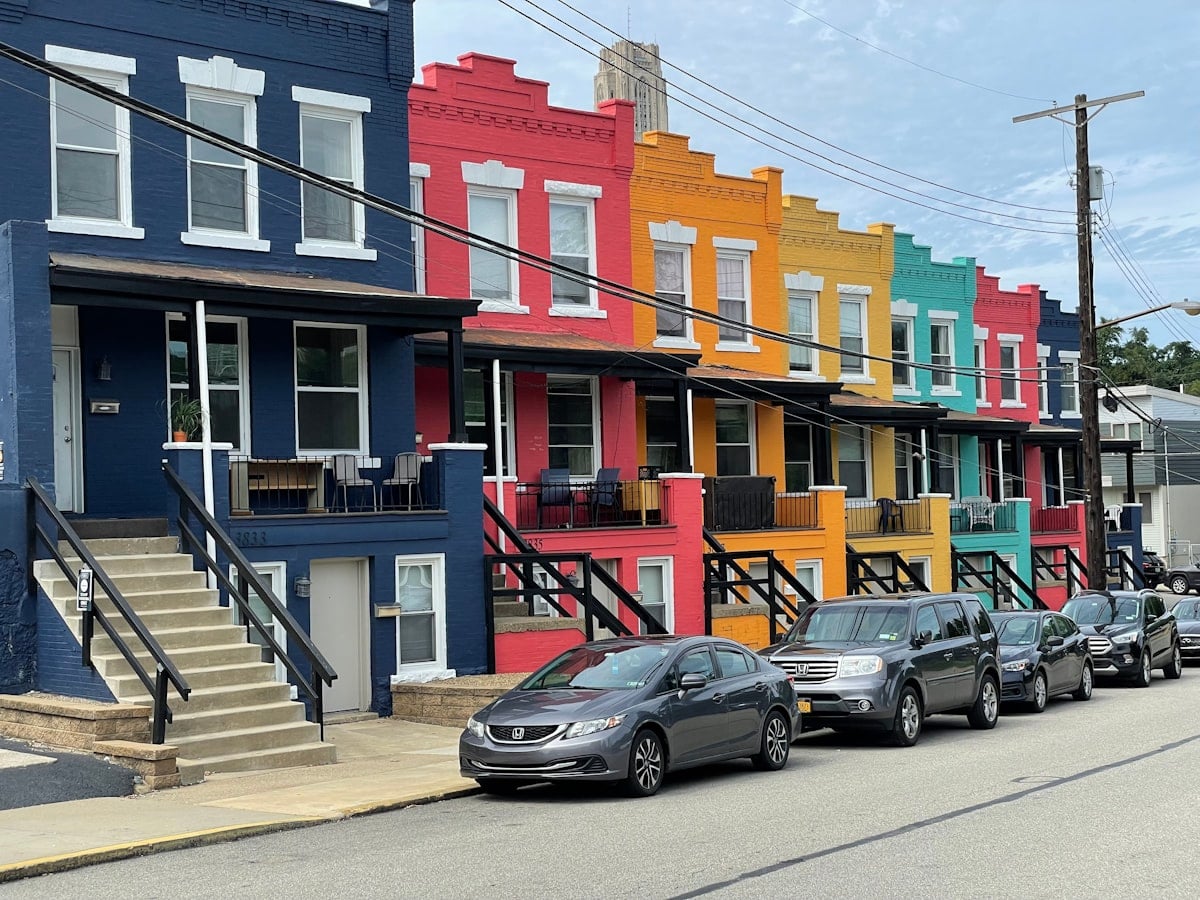
2026 Millage Rates: What You’ll Pay
For 2026, Pittsburgh property owners are facing rate increases from multiple taxing bodies. Here’s the current breakdown:
| Taxing Body | Millage Rate | Per $100K Assessed | Change |
|---|---|---|---|
| City of Pittsburgh | 9.67 mills | $967 | Up from 8.06 (+20%) |
| Pittsburgh Public Schools | 10.457 mills | $1,046 | Slight increase |
| Allegheny County | 6.43 mills | $643 | Up from 4.73 (+36%) |
| Combined Total | ~26.56 mills | ~$2,656 | ~$350 more than 2024 |
Pittsburgh City Council approved the 20% city millage increase to close what officials described as a $20â$30 million budget gap. Allegheny County’s 36% increase â its first hike in over a decade â took effect in 2025.
The city also levies smaller millage amounts for parks (0.50 mills) and the Carnegie Library system (0.25 mills), which are included in the city rate above.
How To Calculate Your Property Tax Bill
Calculating your Pittsburgh property taxes is straightforward once you know your assessed value. Here’s the formula:
Step-By-Step Example
Let’s say your home has an assessed value of $150,000:
City Tax
$150,000 ÷ 1,000 à 9.67 = $1,451
School District Tax
$150,000 ÷ 1,000 à 10.457 = $1,569
County Tax
$150,000 ÷ 1,000 à 6.43 = $965
Total Annual Property Tax
$3,985 per year (before exemptions or discounts)
You can also use the official Allegheny County Property Assessment Tax Calculator on the county website, or the City of Pittsburgh’s Property Tax Worksheet to verify your numbers.
Your assessed value can be found on your most recent tax bill or by searching the Allegheny County real estate portal online.
Not Sure How Taxes Affect Your Home’s Value?
We help Pittsburgh homeowners understand exactly what their property is worth â and what they’ll net after taxes, fees, and closing costs.
Get My Free Home Valuation
Takes 2 minutes. No strings attached.
Exemptions & Discounts That Save You Money
Homestead Exclusion (Act 50)
If your property is your primary residence, you likely qualify for the Homestead Exclusion. This reduces the assessed value used to calculate your taxes â which directly lowers your bill.
The Homestead Exclusion amounts for Pittsburgh are:
| Taxing Body | Homestead Exclusion Amount |
|---|---|
| City of Pittsburgh (includes parks & library) | $15,000 off assessed value |
| Pittsburgh Public Schools | $43,750 off assessed value |
| County | Varies by year |
You only need to apply once, and it stays on your property as long as it remains your primary residence. If you haven’t applied yet, contact the Allegheny County Office of Property Assessments.
Act 77 Senior Tax Relief
Pittsburgh’s senior tax relief program under Act 77 can reduce your city property tax bill by 40%. Eligibility requirements include:
You must be age 60 or older (or a widow/widower aged 50â60, or permanently disabled aged 18â60). You must have owned and lived in your Allegheny County home continuously for the past 10 years. Your gross household income must be $30,000 or less â and only 50% of Social Security, SSI, and Railroad Retirement Tier 1 benefits count toward that limit.
Early Payment Discount
All three taxing bodies offer a 2% discount if you pay your full annual bill (or your first installment) before the early-payment deadline. For the City of Pittsburgh in 2026, that deadline was extended to February 17, 2026. For Allegheny County, the discount window typically runs through March 31.
It’s free money â don’t leave it on the table.
Tax Abatements For New Construction & Renovations
If you build a new home or make substantial improvements to an existing property in Pittsburgh, you may qualify for a property tax abatement lasting up to 10 years.
A tax abatement is a temporary reduction or elimination of the property tax on the added value created by your construction or renovation. It typically applies to the increase in assessed value â not the underlying land or the pre-existing structure.
What Qualifies
Common qualifying categories include new residential construction, conversions from commercial to residential use, and substantial rehabilitations that create or increase dwelling units. The abatement generally takes effect once construction is complete and a Certificate of Occupancy is issued.
How To Appeal Your Property Assessment
If you believe your property’s assessed value is too high, you have the right to file an appeal with the Allegheny County Board of Property Assessment Appeals and Review (BPAAR). There is no cost to file.
When You Should Consider An Appeal
You may have a strong case if your assessed value is significantly higher than 50.1% (the 2026 CLR) of your home’s actual current market value, if comparable homes in your neighborhood have lower assessments, or if your property has condition issues that aren’t reflected in the assessment.
How The Appeal Process Works
File Your Appeal
Submit your appeal online through the Allegheny County Real Estate Portal. The deadline is September 1 for the following tax year (September 2, 2026 for 2027 taxes, since September 1 falls on a holiday).
Gather Your Evidence
Appraisals, comparable sale prices (not assessed values), photos of property condition issues, and estimates for needed repairs are the most commonly accepted evidence. Submit all evidence at least 10 days before your hearing.
Attend Your Hearing
Hearings are conducted by phone, take about 10 minutes, and are relatively informal. A hearing officer with real estate experience reviews your evidence and writes a report.
Receive Your Decision
Rulings typically take 6â8 weeks. If you disagree with the outcome, you can file a second-level appeal with the Board of Viewers.
Transfer Taxes When Buying Or Selling
In addition to annual property taxes, Pittsburgh real estate transactions are subject to a realty transfer tax â a one-time tax paid when property changes hands.
| Entity | Transfer Tax Rate |
|---|---|
| State of Pennsylvania | 1% |
| City of Pittsburgh | 3% |
| Pittsburgh School District | 1% |
| Total Transfer Tax | 5% |
On a $300,000 home, that’s $15,000 in transfer taxes. Both the buyer and seller are held jointly liable, though in practice the split is negotiated as part of the transaction. In the Pittsburgh market, it’s common for buyer and seller to split the transfer tax evenly â but this can vary by deal.
Payment Deadlines, Discounts & Penalties
Because you receive separate tax bills from three entities, staying on top of deadlines is critical. Here’s the general timeline:
City Of Pittsburgh
Discount period: Pay by the early deadline (February 17 for 2026) to receive a 2% discount on your annual bill or first installment. After the discount window closes, the face amount is due. Late payments incur penalties.
Allegheny County
Discount period: Through March 31 â pay during this window for a 2% discount. Face period: April 1â30 â full amount due, no discount, no penalty. Penalty period: Beginning May 1 â a one-time 5% penalty on the gross amount, plus 1% interest per month for each month taxes remain delinquent.
Pittsburgh Public Schools
The school district follows a similar discount/face/penalty schedule. Check your bill for exact dates, as they can shift year to year.
Thinking About Buying Or Selling In Pittsburgh?
Property taxes are one piece of the puzzle. Our team helps you see the full picture â from pricing strategy to closing costs to net proceeds.
Talk To My Team
The #1 real estate team in Western PA. Over $105M in sales volume.
Frequently Asked Questions
Ready To Make A Smarter Move?
Whether you’re buying your first home, selling for top dollar, or just trying to understand what your property costs you â the Marzullo Team has the local expertise to guide you through every step. Learn about buying in Pittsburgh or get a custom selling strategy.
Get My Free Consultation
The #1 team in Western PA. 412 transactions. 98% list-to-sale ratio.
The Marzullo Team at Compass RE
© 2026 The Marzullo Team at Compass RE. All rights reserved.
Equal Housing Opportunity. The Marzullo Team at Compass RE is committed to compliance with all federal, state, and local fair housing laws. We do not discriminate on the basis of race, color, religion, sex, national origin, disability, familial status, or any other protected class.
Share My QR |
|
Accessibility
Accessibility modes
Online Dictionary
Readable Experience
Visually Pleasing Experience
Easy Orientation
Accessibility Statement
- johnmarzulloteam.com
- August 23, 2026
Compliance status
We firmly believe that the internet should be available and accessible to anyone, and are committed to providing a website that is accessible to the widest possible audience, regardless of circumstance and ability.
To fulfill this, we aim to adhere as strictly as possible to the World Wide Web Consortium’s (W3C) Web Content Accessibility Guidelines 2.1 (WCAG 2.1) at the AA level. These guidelines explain how to make web content accessible to people with a wide array of disabilities. Complying with those guidelines helps us ensure that the website is accessible to all people: blind people, people with motor impairments, visual impairment, cognitive disabilities, and more.
This website utilizes various technologies that are meant to make it as accessible as possible at all times. We utilize an accessibility interface that allows persons with specific disabilities to adjust the website’s UI (user interface) and design it to their personal needs.
Additionally, the website utilizes an AI-based application that runs in the background and optimizes its accessibility level constantly. This application remediates the website’s HTML, adapts Its functionality and behavior for screen-readers used by the blind users, and for keyboard functions used by individuals with motor impairments.
If you’ve found a malfunction or have ideas for improvement, we’ll be happy to hear from you. You can reach out to the website’s operators by using the following email [email protected]
Screen-reader and keyboard navigation
Our website implements the ARIA attributes (Accessible Rich Internet Applications) technique, alongside various different behavioral changes, to ensure blind users visiting with screen-readers are able to read, comprehend, and enjoy the website’s functions. As soon as a user with a screen-reader enters your site, they immediately receive a prompt to enter the Screen-Reader Profile so they can browse and operate your site effectively. Here’s how our website covers some of the most important screen-reader requirements, alongside console screenshots of code examples:
-
Screen-reader optimization: we run a background process that learns the website’s components from top to bottom, to ensure ongoing compliance even when updating the website. In this process, we provide screen-readers with meaningful data using the ARIA set of attributes. For example, we provide accurate form labels; descriptions for actionable icons (social media icons, search icons, cart icons, etc.); validation guidance for form inputs; element roles such as buttons, menus, modal dialogues (popups), and others. Additionally, the background process scans all of the website’s images and provides an accurate and meaningful image-object-recognition-based description as an ALT (alternate text) tag for images that are not described. It will also extract texts that are embedded within the image, using an OCR (optical character recognition) technology. To turn on screen-reader adjustments at any time, users need only to press the Alt+1 keyboard combination. Screen-reader users also get automatic announcements to turn the Screen-reader mode on as soon as they enter the website.
These adjustments are compatible with all popular screen readers, including JAWS and NVDA.
-
Keyboard navigation optimization: The background process also adjusts the website’s HTML, and adds various behaviors using JavaScript code to make the website operable by the keyboard. This includes the ability to navigate the website using the Tab and Shift+Tab keys, operate dropdowns with the arrow keys, close them with Esc, trigger buttons and links using the Enter key, navigate between radio and checkbox elements using the arrow keys, and fill them in with the Spacebar or Enter key.Additionally, keyboard users will find quick-navigation and content-skip menus, available at any time by clicking Alt+1, or as the first elements of the site while navigating with the keyboard. The background process also handles triggered popups by moving the keyboard focus towards them as soon as they appear, and not allow the focus drift outside of it.
Users can also use shortcuts such as “M” (menus), “H” (headings), “F” (forms), “B” (buttons), and “G” (graphics) to jump to specific elements.
Disability profiles supported in our website
- Epilepsy Safe Mode: this profile enables people with epilepsy to use the website safely by eliminating the risk of seizures that result from flashing or blinking animations and risky color combinations.
- Visually Impaired Mode: this mode adjusts the website for the convenience of users with visual impairments such as Degrading Eyesight, Tunnel Vision, Cataract, Glaucoma, and others.
- Cognitive Disability Mode: this mode provides different assistive options to help users with cognitive impairments such as Dyslexia, Autism, CVA, and others, to focus on the essential elements of the website more easily.
- ADHD Friendly Mode: this mode helps users with ADHD and Neurodevelopmental disorders to read, browse, and focus on the main website elements more easily while significantly reducing distractions.
- Blindness Mode: this mode configures the website to be compatible with screen-readers such as JAWS, NVDA, VoiceOver, and TalkBack. A screen-reader is software for blind users that is installed on a computer and smartphone, and websites must be compatible with it.
- Keyboard Navigation Profile (Motor-Impaired): this profile enables motor-impaired persons to operate the website using the keyboard Tab, Shift+Tab, and the Enter keys. Users can also use shortcuts such as “M” (menus), “H” (headings), “F” (forms), “B” (buttons), and “G” (graphics) to jump to specific elements.
Additional UI, design, and readability adjustments
- Font adjustments – users, can increase and decrease its size, change its family (type), adjust the spacing, alignment, line height, and more.
- Color adjustments – users can select various color contrast profiles such as light, dark, inverted, and monochrome. Additionally, users can swap color schemes of titles, texts, and backgrounds, with over 7 different coloring options.
- Animations – epileptic users can stop all running animations with the click of a button. Animations controlled by the interface include videos, GIFs, and CSS flashing transitions.
- Content highlighting – users can choose to emphasize important elements such as links and titles. They can also choose to highlight focused or hovered elements only.
- Audio muting – users with hearing devices may experience headaches or other issues due to automatic audio playing. This option lets users mute the entire website instantly.
- Cognitive disorders – we utilize a search engine that is linked to Wikipedia and Wiktionary, allowing people with cognitive disorders to decipher meanings of phrases, initials, slang, and others.
- Additional functions – we provide users the option to change cursor color and size, use a printing mode, enable a virtual keyboard, and many other functions.
Browser and assistive technology compatibility
We aim to support the widest array of browsers and assistive technologies as possible, so our users can choose the best fitting tools for them, with as few limitations as possible. Therefore, we have worked very hard to be able to support all major systems that comprise over 95% of the user market share including Google Chrome, Mozilla Firefox, Apple Safari, Opera and Microsoft Edge, JAWS and NVDA (screen readers), both for Windows and for MAC users.
Notes, comments, and feedback
Despite our very best efforts to allow anybody to adjust the website to their needs, there may still be pages or sections that are not fully accessible, are in the process of becoming accessible, or are lacking an adequate technological solution to make them accessible. Still, we are continually improving our accessibility, adding, updating and improving its options and features, and developing and adopting new technologies. All this is meant to reach the optimal level of accessibility, following technological advancements. For any assistance, please reach out to [email protected]