

Pittsburgh Neighborhood Map: The 90 Neighborhoods of the City Explained
Pittsburgh Neighborhood Map: The 90 Neighborhoods of the City Explained
The definitive 2026 Pittsburgh neighborhood map â every district, every ‘burgh, every school-catchment boundary. Built by the #1 real estate team in Western PA so you can find the right block, not just the right house.
Table of Contents
- How Pittsburgh’s Neighborhood Map Works
- The 90 Neighborhoods at a Glance
- East, North, South & West End Explained
- The Most Popular Neighborhoods in 2026
- Home Prices by Pittsburgh Neighborhood
- School Districts & Catchment Lines
- Commute, Transit & Walkability
- How to Pick the Right Neighborhood
- Pittsburgh Neighborhood FAQ
How Pittsburgh’s Neighborhood Map Actually Works
If you’re trying to decipher the Pittsburgh neighborhood map, you’ve already discovered that this is not a city that behaves like a grid. Pittsburgh officially recognizes 90 distinct neighborhoods inside the city limits alone — and that count doesn’t include the 130+ boroughs and townships that make up Allegheny County. Hills, rivers, ravines, and 446 bridges divide the city into pockets that can feel like entirely different worlds even when they’re five minutes apart.
For buyers and sellers, that geography is both a blessing and a challenge. A single block line can change the property tax rate, the school district, and the list price by 20%. At The Marzullo Team, we’ve spent two decades studying these micro-markets — and this is the guide we wish every client had before they started searching Zillow.
Below, you’ll find a complete neighborhood map breakdown: the four quadrants of the city, how the “Pittsburgh Ps” are grouped, which neighborhoods appreciated fastest in 2025, and how to decode catchment zones so you don’t end up in the wrong school. Whether you’re buying your first home, selling a long-time residence, or relocating from out of town, use this as your master reference.
Pittsburgh has 90 official neighborhoods inside city limits, organized into 4 quadrants (East End, North Side, South Side, West End). Each neighborhood has its own character, price profile, and school catchment — and in many cases, its own council-district representation.
The 90 Neighborhoods of Pittsburgh at a Glance
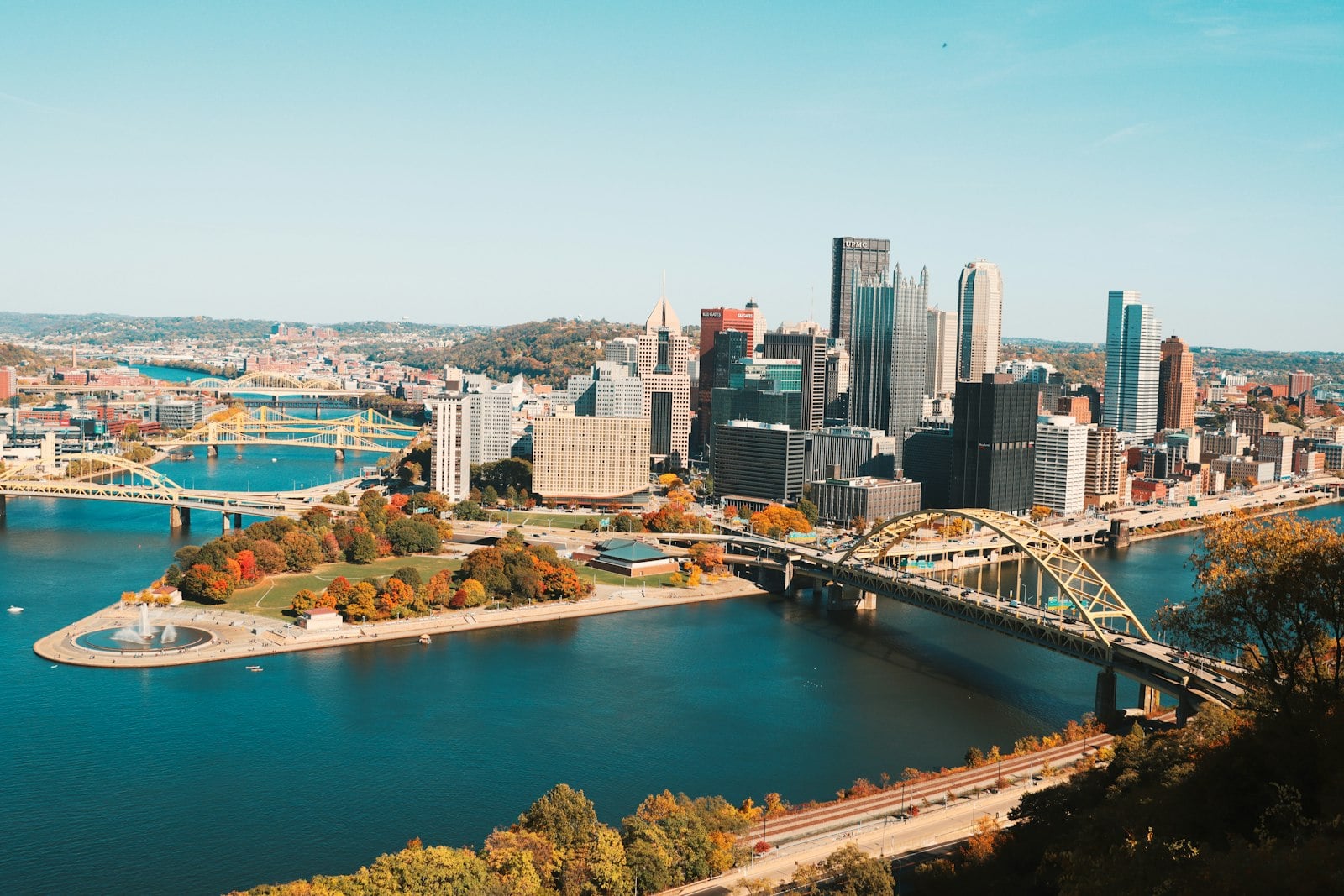
The City of Pittsburgh’s planning department officially recognizes 90 neighborhoods, each with defined boundaries that govern planning commission reviews, historic designations, and neighborhood-association funding. Here they are, grouped by quadrant, so you can match any listing on a map to the right pocket of the city.
East End (35 Neighborhoods)
The East End is Pittsburgh’s largest and most diverse quadrant, anchored by the universities and major hospitals. It includes Shadyside, Squirrel Hill North & South, Point Breeze, Point Breeze North, Regent Square, East Liberty, Friendship, Bloomfield, Garfield, Lawrenceville (Upper, Central, Lower), Highland Park, Morningside, Stanton Heights, Lincoln-Lemington-Belmar, East Hills, Homewood (North, South, West), Larimer, Oakland (Central, North, South, West), Hazelwood, Glen Hazel, Greenfield, Squirrel Hill, Swisshelm Park, and Polish Hill.
North Side (18 Neighborhoods)
Separated from downtown by the Allegheny River, the North Side runs from the stadiums out to the city’s northern border. It includes Allegheny Center, Allegheny West, Central Northside, East Allegheny (Deutschtown), Manchester, Troy Hill, Spring Garden, Spring Hill-City View, Fineview, Perry North, Perry South, Brighton Heights, Marshall-Shadeland, California-Kirkbride, North Shore, Northview Heights, Summer Hill, and Chateau.
South Side (16 Neighborhoods)
Across the Monongahela from downtown, this quadrant includes the South Side Flats, South Side Slopes, Mount Washington, Duquesne Heights, Allentown, Arlington, Arlington Heights, Beltzhoover, Beechview, Brookline, Bon Air, Carrick, Knoxville, Mount Oliver, Overbrook, and St. Clair.
West End & Downtown (21 Neighborhoods)
The West End plus the central business district round out the city. This group includes Downtown (Central Business District), The Strip District, Uptown (Bluff), Crawford-Roberts, Middle Hill, Upper Hill, Terrace Village, West End, Elliott, Esplen, Fairywood, Oakwood, Sheraden, Ridgemont, Westwood, East Carnegie, Banksville, South Shore, and Windgap.
The official City of Pittsburgh neighborhood boundary map is maintained by the Department of City Planning. But if you’re trying to narrow down a short list, we build a custom neighborhood match for every client based on budget, commute, school catchment, and lifestyle fit.
East, North, South & West End Pittsburgh: What’s the Difference?
Any good Pittsburgh neighborhood map starts with the quadrants. Each one has a different rhythm, housing stock, and price range — and knowing which side of town fits your life cuts your search time dramatically.
East End — Walkable, Expensive, University-Adjacent
The East End houses Pitt, CMU, UPMC’s flagship campuses, and some of Pittsburgh’s most sought-after blocks. Expect tree-lined streets, brick Victorians, strong walk scores, and median prices well above the city average. Squirrel Hill, Shadyside, and Regent Square routinely top $500K; Point Breeze pushes $700K+ for renovated stock. Lawrenceville has become the dining-scene epicenter and is now one of the fastest-appreciating markets in the city.
North Side — Rivers, Stadiums, Historic Charm
The North Side is where you’ll find PNC Park, Acrisure Stadium, the Warhol, and the Mexican War Streets. Allegheny West and the Central Northside feature some of the best-preserved Victorian stock in the city. Brighton Heights, Perry Hilltop, and Observatory Hill offer solid mid-market housing with river-valley views. The North Side has also absorbed significant corporate investment since Rivers Casino opened.
South Side — Hillside Views, Nightlife, Family Neighborhoods
The South Side Flats is famous for nightlife on East Carson. But the real residential story is on top of Mt. Washington, in Beechview, and in Brookline — tight-knit neighborhoods with some of the best skyline views in America and mid-$200K to mid-$400K entry points. Carrick and Overbrook remain the city’s most affordable starter-home markets.
West End & Downtown — Urban Core Revival
Downtown proper has seen a wave of luxury conversions — former office towers turning into condos and rentals. The Strip District is the boutique loft market of Pittsburgh, with $400K to $900K pricing for renovated space. The West End neighborhoods of Elliott, Sheraden, and Crafton Heights remain the most affordable entry points to city living, often under $200K.
Not sure which neighborhood fits?
The Marzullo Team works 90 city neighborhoods every week. Tell us your must-haves — commute, budget, schools, square footage — and we’ll send a curated short list of blocks that actually fit.
The Most Popular Pittsburgh Neighborhoods in 2026
Based on MLS days-on-market, buyer demand index, and average sale-to-list ratio across the last 12 months, these are the Pittsburgh neighborhoods with the most competitive buyer pools in 2026. If you’re selling in any of these, you can almost certainly command list price or above with the right strategy. If you’re buying, you need to move fast and be ready for multiple offers.
| Neighborhood | Zip | Median Sale | Days on Market | Sale:List |
|---|---|---|---|---|
| Lawrenceville | 15201 | $449K | 11 | 101.4% |
| Squirrel Hill | 15217 | $568K | 14 | 100.2% |
| Shadyside | 15232 | $525K | 18 | 99.6% |
| Regent Square | 15218 | $398K | 9 | 102.8% |
| Point Breeze | 15208 | $615K | 16 | 99.9% |
| Mt. Washington | 15211 | $312K | 21 | 98.4% |
| Highland Park | 15206 | $445K | 12 | 100.7% |
| Bloomfield | 15224 | $338K | 13 | 100.1% |
Data: West Penn MLS, rolling 12 months through Q1 2026. Compiled by The Marzullo Team.
Home Prices Across the Pittsburgh Neighborhood Map
Pittsburgh remains one of the most affordable major metros in the United States, but price spreads within the city are dramatic. A 3-bedroom in Brookline can sell for $215K on the same weekend a similar 3-bedroom in Point Breeze closes at $725K. Here’s how the current market looks across the most common tiers — use this as a budgeting cheat sheet before you narrow your search.
Under $250K — Entry-Level City Neighborhoods
Brookline, Carrick, Overbrook, Beechview, Elliott, Sheraden, Spring Hill, Perry Hilltop, Brighton Heights (entry), Lincoln Place, Knoxville, Beltzhoover, East Hills. Best for first-time buyers, investors, and anyone willing to trade walkability for square footage.
$250K – $450K — Mid-Market Mainstays
Mt. Washington, Duquesne Heights, Central Northside, Troy Hill, Morningside, Stanton Heights, Swisshelm Park, Greenfield, Beechview upper tier, Bloomfield, Friendship, Garfield (reno stock). These blocks hit the sweet spot for move-up buyers: solid housing stock, shorter commutes, and appreciating slowly and steadily.
$450K – $700K — Established Premium
Shadyside, Squirrel Hill (most of it), Lawrenceville, Highland Park, Regent Square, North Oakland, Allegheny West, Mexican War Streets, The Strip District loft market.
$700K+ — Luxury Pittsburgh
Point Breeze, North Squirrel Hill, Fox Chapel (city-adjacent), Sewickley (just outside), select Downtown and Strip District penthouses. Custom homes on Mt. Washington with skyline views frequently exceed $1M.
Two houses on the same street can have a $40,000+ tax-assessment difference depending on which year they last changed hands. Always check current Allegheny County property tax records before writing an offer — it’s a detail most out-of-town buyers miss.
Pittsburgh Neighborhood Map + School District Overlay
All 90 city neighborhoods fall within Pittsburgh Public Schools (PPS), but PPS operates under a complex magnet + feeder-pattern system. Two houses on the same block can feed into different elementary, middle, or high schools. Outside city limits, Allegheny County is home to more than 40 separate school districts — and they drive huge price premiums.
High-performing suburban districts with the strongest buyer pull in 2026 include Mt. Lebanon, Upper St. Clair, North Allegheny, Fox Chapel Area, Hampton, Pine-Richland, South Fayette, Peters Township, and Quaker Valley. If a school catchment is non-negotiable, confirm boundaries directly with the district — lines can shift year to year. For a full breakdown, see our Best School Districts in Pittsburgh Guide.
Commute, Transit & Walkability Across the City
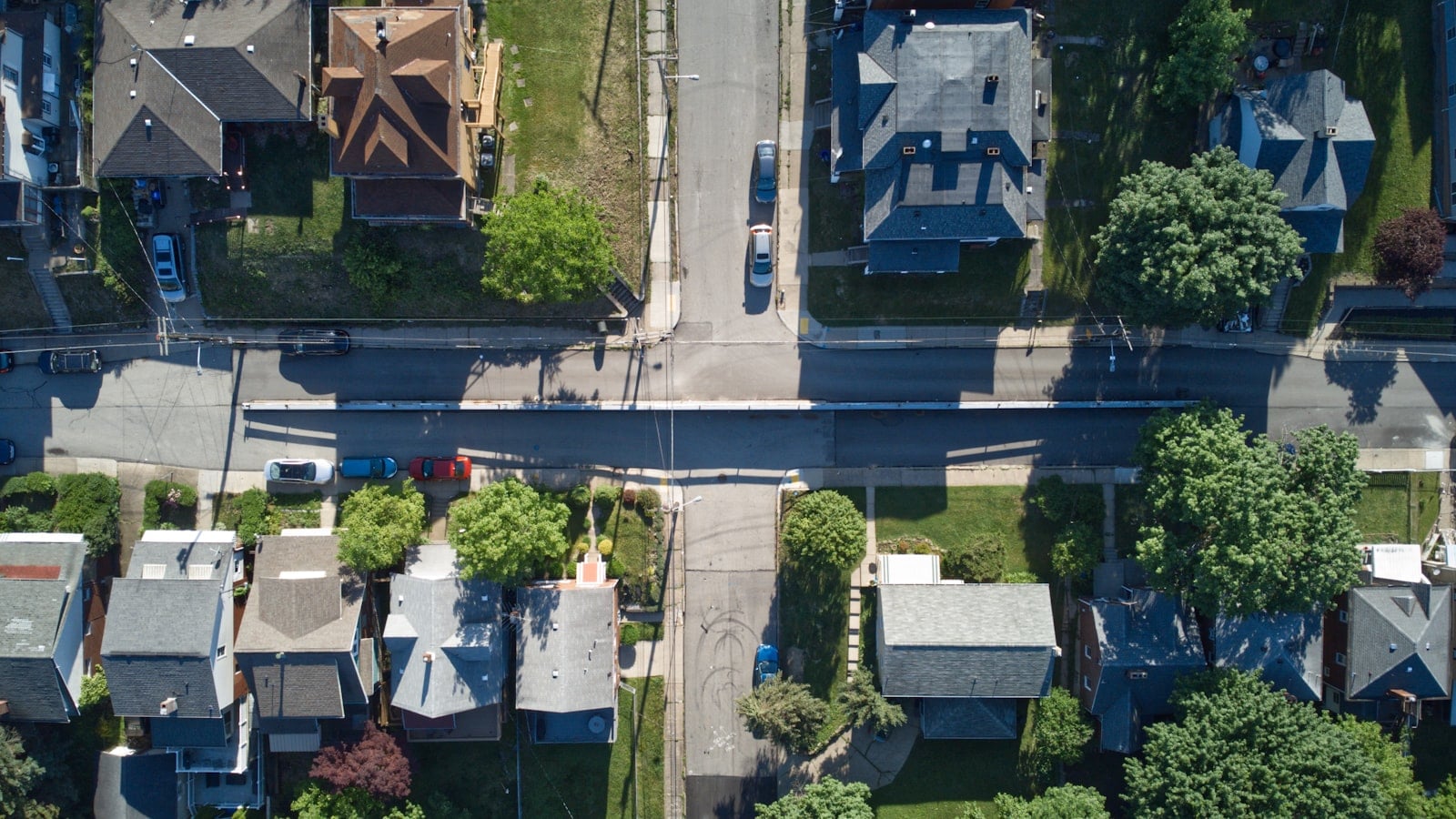
Pittsburgh’s topography means one mile can take 15 minutes. The good news: commuting patterns are predictable once you understand the spine of the city. Here’s the practical cheat sheet our team walks every relocating client through.
Downtown Commute — Fastest Neighborhoods
Strip District, North Shore, Mexican War Streets, South Side Flats, Uptown, and Oakland all clock 10 minutes or less to downtown off-peak. Lawrenceville and Shadyside are 12–18 minutes, with bus and the new MLK bus-rapid-transit corridor cutting travel time significantly.
Oakland / Hospitals Commute
If you work at UPMC, CMU, or Pitt, target Squirrel Hill, Shadyside, Greenfield, Oakland, Polish Hill, or North Oakland. These are all under 15 minutes door-to-door, many are walkable, and all have direct 61/71/54 bus service.
Suburban Commuters
Parkway East (376) connects Monroeville, Edgewood, and Forest Hills to downtown in 20–30 minutes. Parkway North (I-279) links the North Hills suburbs — Ross, McCandless, Wexford — in 20–35 minutes. Parkway West serves Moon, Robinson, and the airport corridor. Rail options remain limited outside the T (light rail) serving the South Hills.
Planning a move across Pittsburgh?
Get a side-by-side neighborhood comparison built for your budget and schedule.
How to Actually Pick the Right Pittsburgh Neighborhood
After 20 years of helping clients navigate this city, we’ve distilled neighborhood choice into a four-question framework. Answer these honestly before you book a single showing and you’ll cut your shortlist from 90 down to 5 in an afternoon.
1. What is your daily non-negotiable?
Not your dream; your default Tuesday. Commute under 20 minutes? Dog park within walking distance? A specific school? Define the one thing you cannot live without. That single filter will eliminate 70% of the map.
2. What is your real budget — including taxes and insurance?
Allegheny County property taxes vary from roughly 1.6% (Mt. Lebanon) to 2.9% (City of Pittsburgh) of assessed value. On a $450K home, that’s a $5,800/year swing. Always run the all-in monthly before setting a hard neighborhood list.
3. How long do you expect to stay?
Under 4 years? Stick to neighborhoods with strong resale velocity (Lawrenceville, Squirrel Hill, Shadyside, Mt. Washington). Five-plus years? You can take a chance on emerging pockets (East Liberty, Homewood edges, Upper Lawrenceville, Brighton Heights) where appreciation is higher but liquidity is thinner.
4. What kind of housing stock matches your lifestyle?
Pittsburgh’s housing is 80%+ pre-1970. If you want open concept, central air, 2-car garage, and a flat driveway — you’re either buying new construction in Lawrenceville, a condo in The Strip, or a 1980s build in the suburbs. Know this going in.
Pittsburgh Neighborhood Map FAQ
Ready To Make A Smarter Move?
As the #1 real estate team in Western PA, we’ve closed deals on every block of the Pittsburgh neighborhood map. Let’s build your short list together.
All market statistics referenced above are sourced from the West Penn Multi-List Service and are current as of Q1 2026. Property values, school catchment lines, tax rates, and neighborhood boundaries can change; always verify independently before making a buying or selling decision. The Marzullo Team at Compass RE is committed to compliance with all federal, state, and local fair housing laws. We do not discriminate on the basis of race, color, religion, sex, national origin, disability, familial status, or any other protected class.